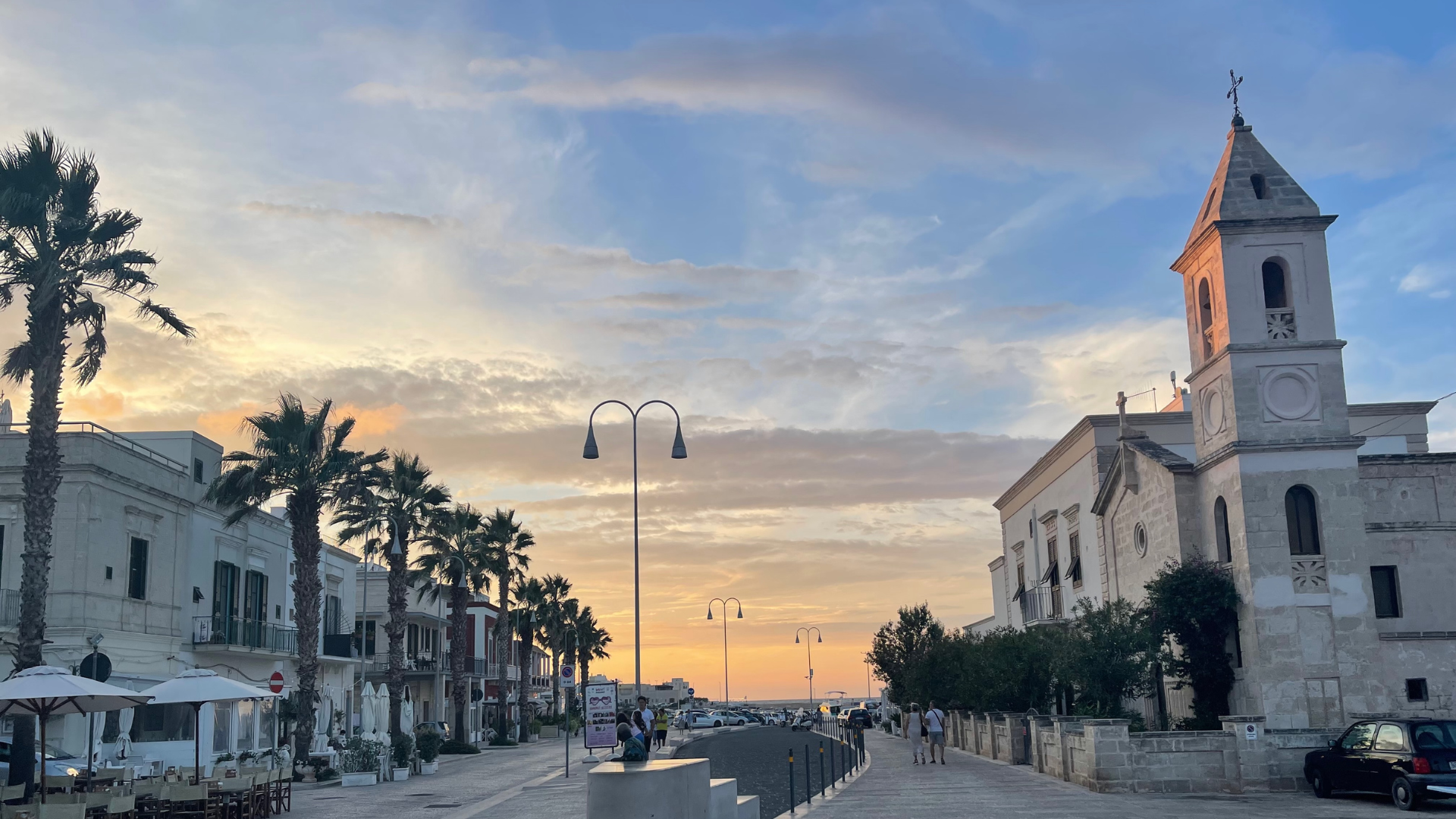
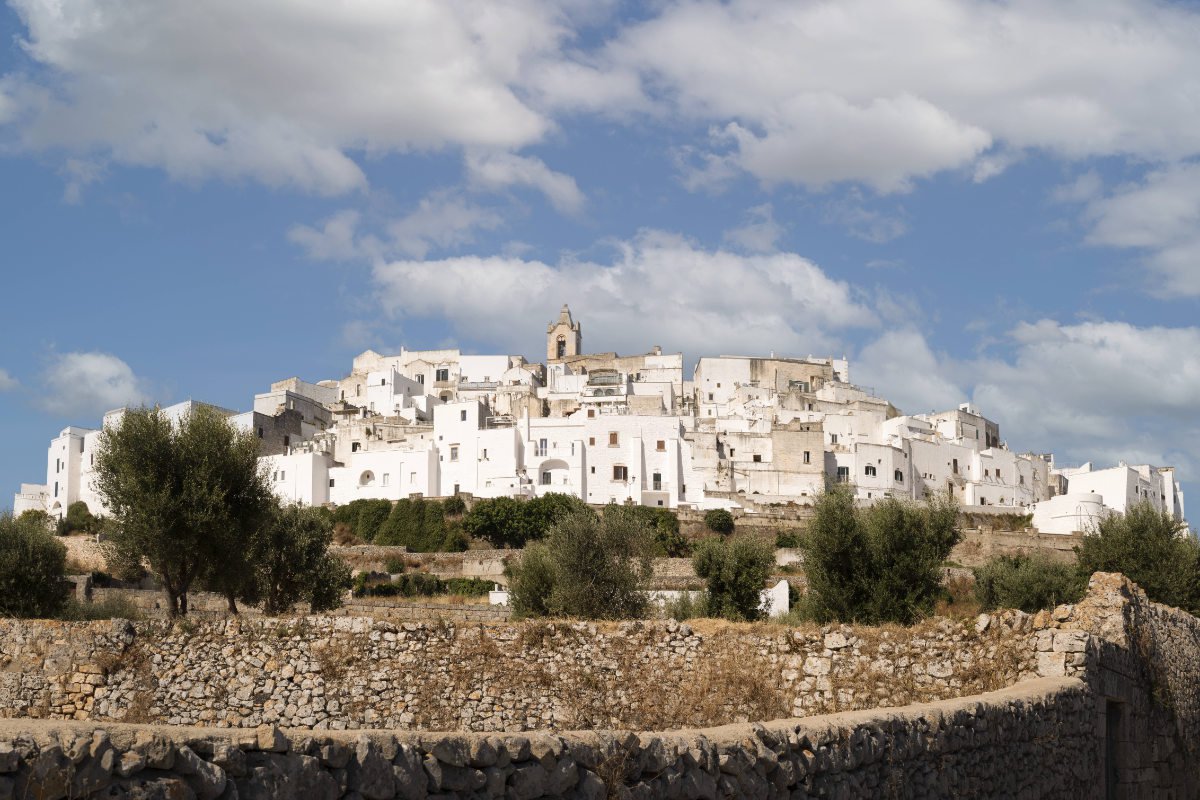
 The White City Ostuni. Photo courtesy of Vista Ostuni.
Forget what you think you know about Puglia — the trulli, the endless orecchiette, the gorgeous beaches. (Okay, maybe don’t forget them. Just set them aside for now.) I’ve found something even better: a golden triangle of art, food and ancient history.
Draw a line from Fasano to Taranto to Brindisi, drop a pin on Ostuni, and you’re in the heart of what Italians call bontà, “abundance.” La Città Bianca, “the white city,” so named for its Jenga-stack of whitewashed houses, is a jewel and, for me, the anchor of my golden triangle where archaeology, art, food, and history orbit in delicious harmony. Poised on the edge of the Val d’Itria, flanked by the Adriatic Sea to the east and the Ionian Sea to the west, it’s a landscape of masserie, hill towns, castles, ancient ruins, and endless olive groves. From here, Puglia’s finest in culture, gastronomy, history, art and nature are all within a 30- to 45-minute drive.
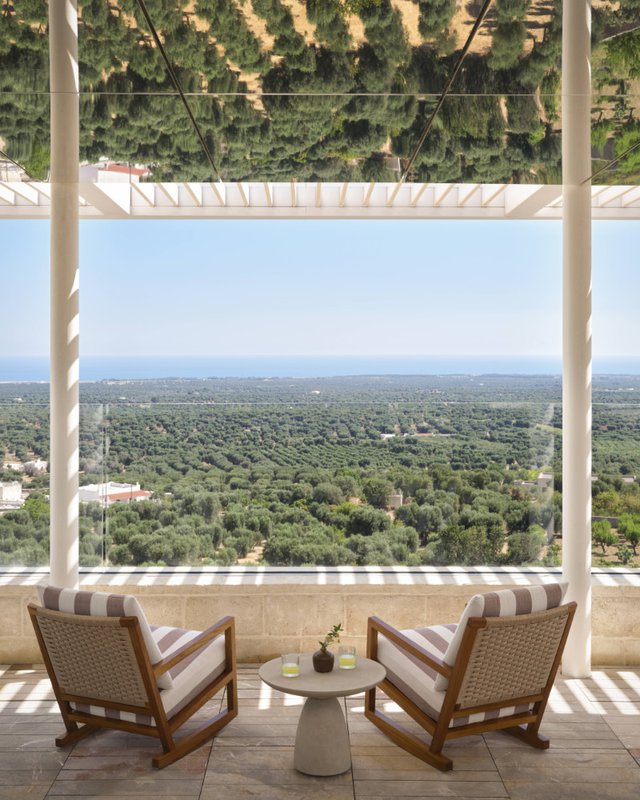
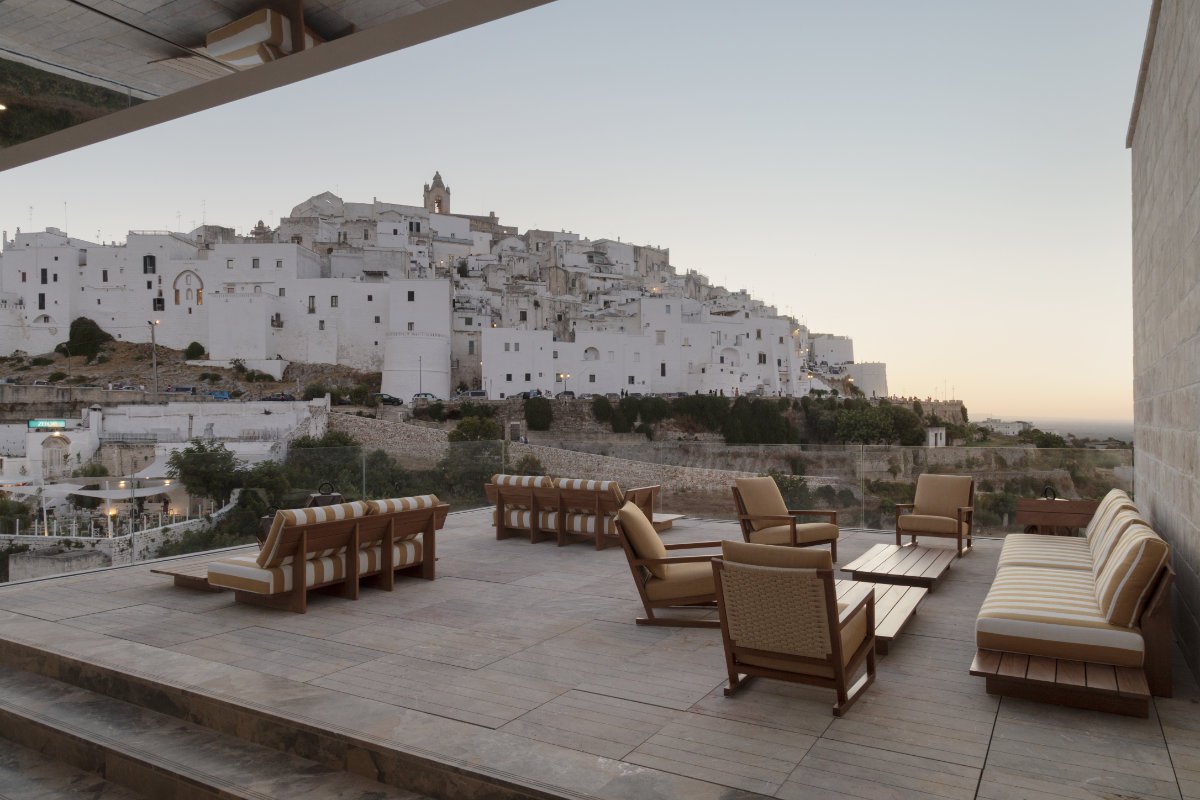
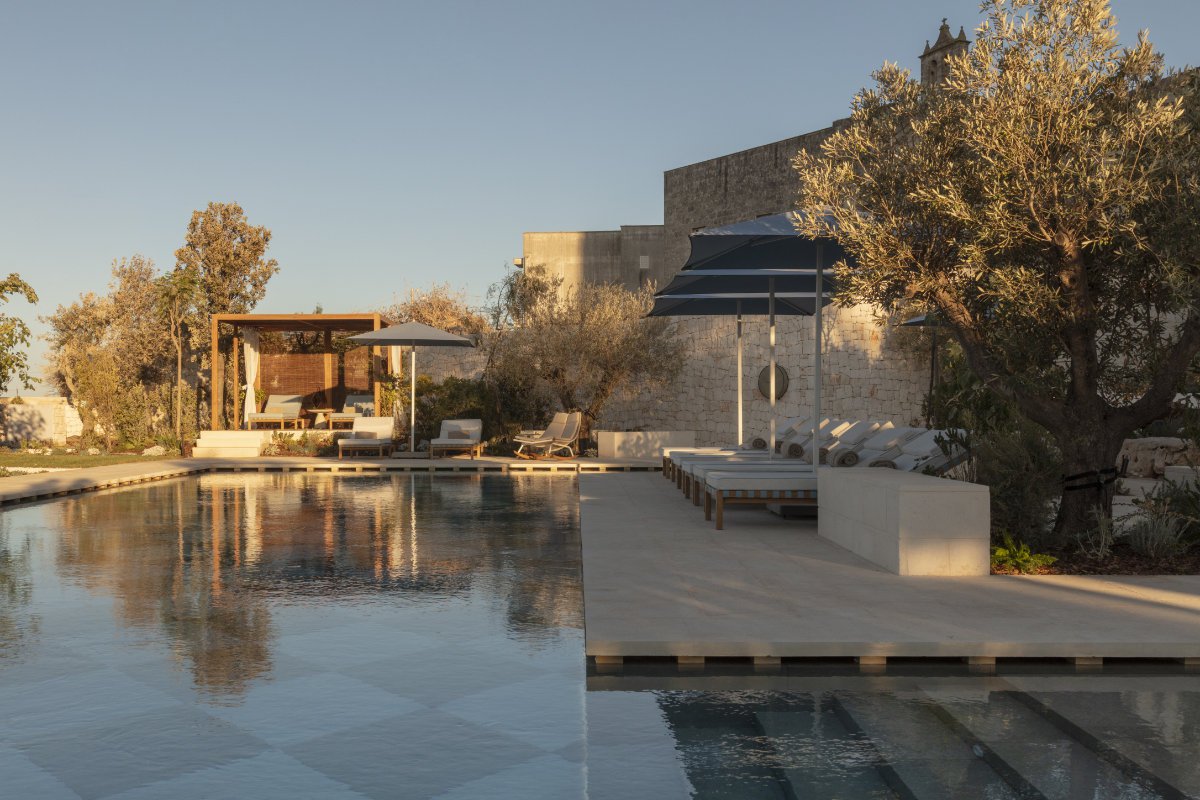
Vista Vibes
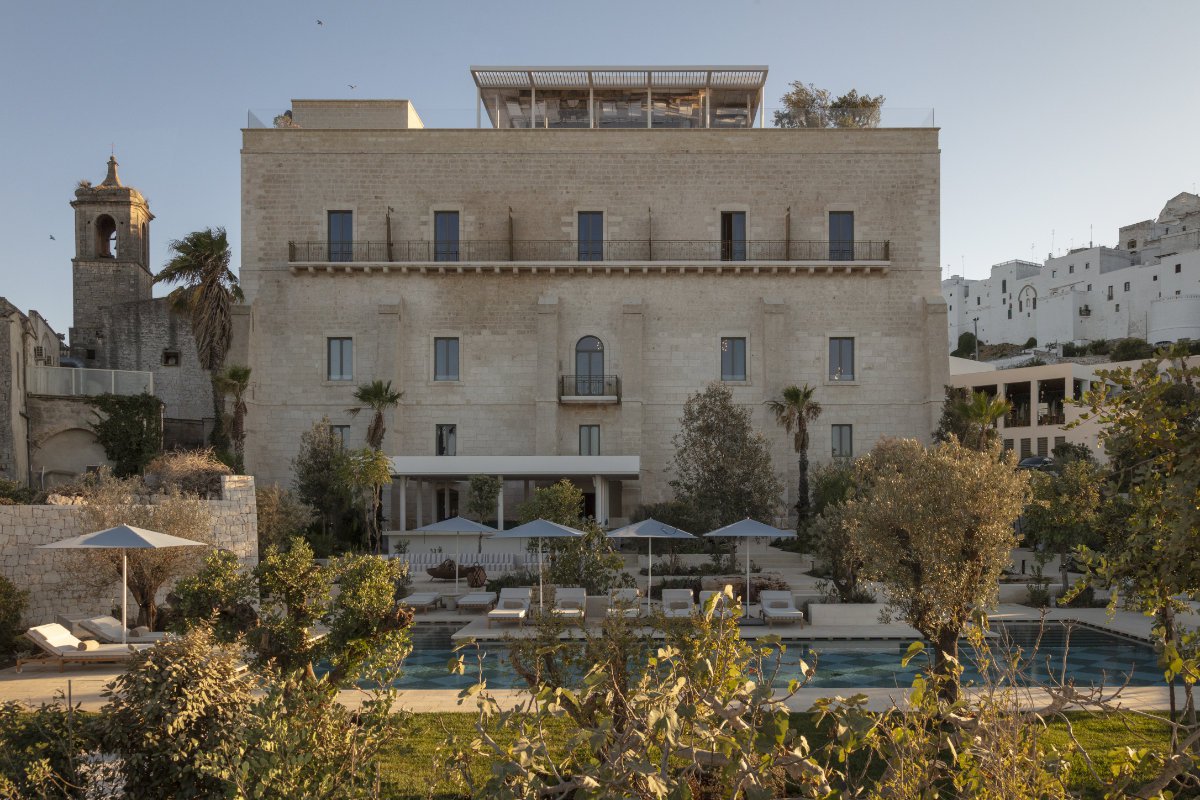
If Ostuni is the center, Vista Ostuni is the epicenter. And yes, it’s a vibe. (And one of our Best New Hotels from Summer 2025.) Lario Hotels’ newest property is a gorgeous case of adaptive reuse and contemporary made-in-Italy design. Its origin story runs deep. Founder in the 14th century as a convent, it later served as an orphanage, a rest home, and, finally, a tobacco warehouse largely staffed by women. Abandoned by the 1970s, it was rescued by the Passera family, the force behind the Vista brand, and reborn this year after a meticulous restoration.
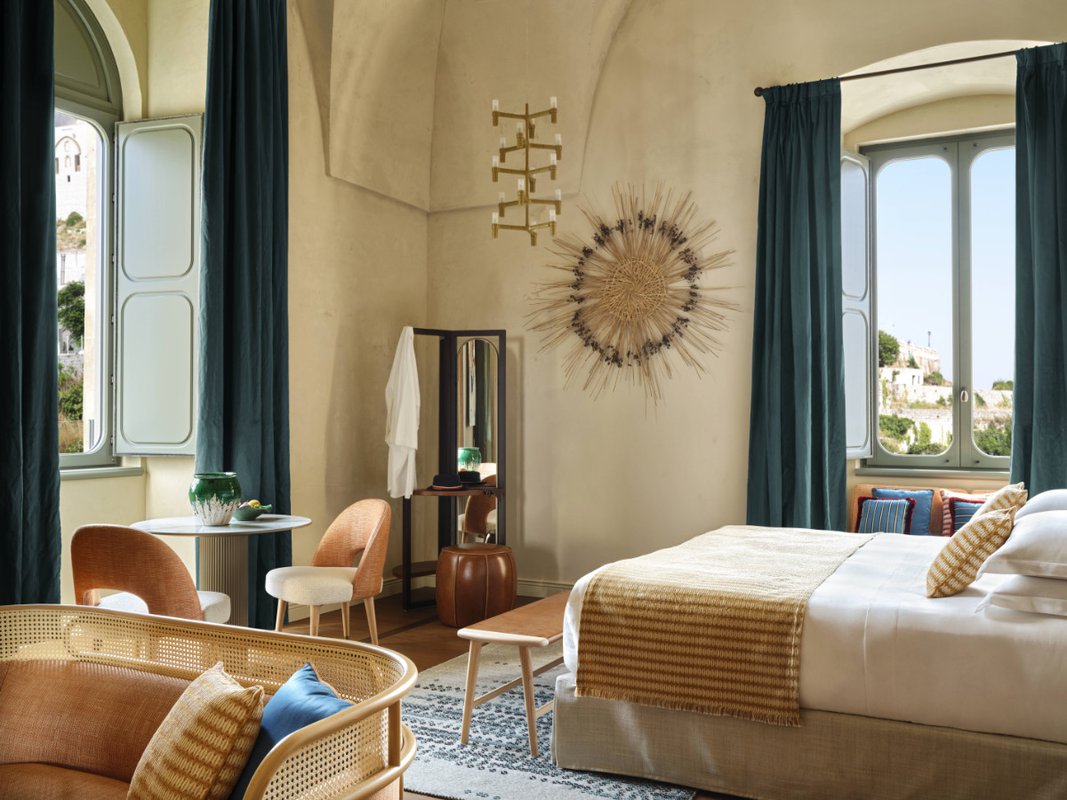
Inside, twenty-eight oversized rooms (nineteen of them suites) soar beneath ceilings that climb to 20 feet, with windows the size of cinema screens looking out over olive groves, the Adriatic, and whitewashed Ostuni. The aesthetic is contemporary Pugliese country: local, soft-hued Trani stone; ceramics from nearby Grottaglie; and bespoke furnishings that mix wood, rattan, and Dedar fabrics in shades of ochre, teal, and terracotta. Italy’s very best contemporary designers with local artisans’ fingerprints everywhere.
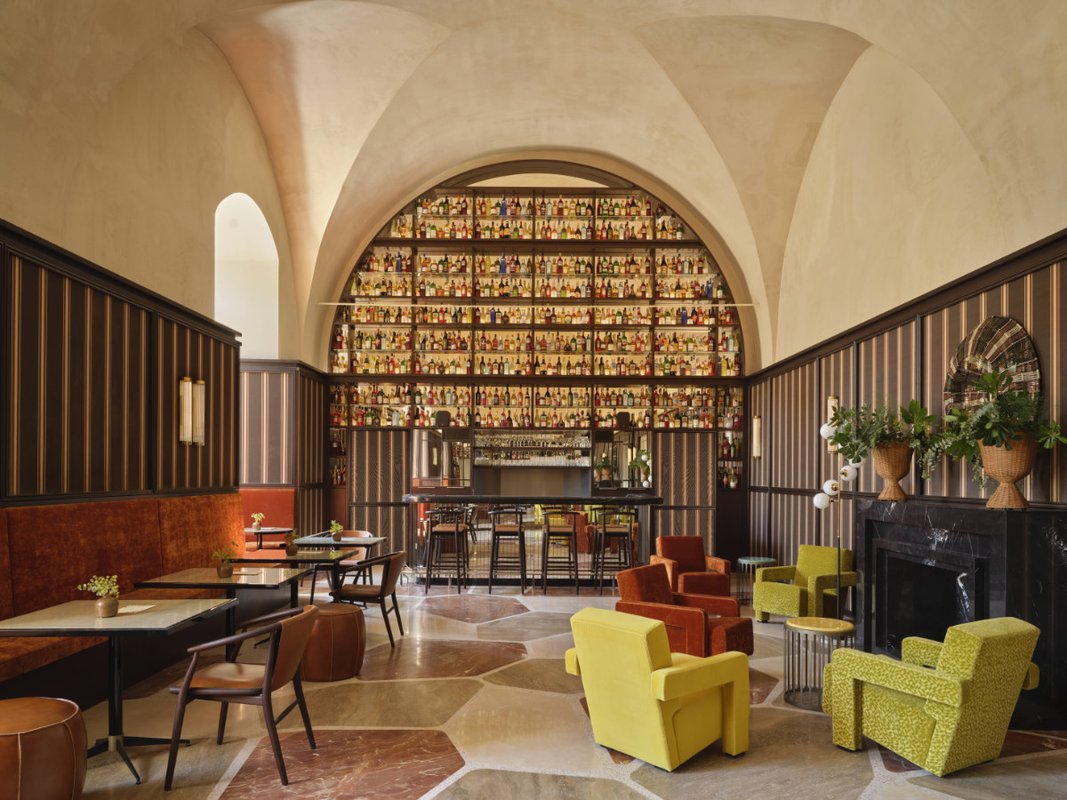
From my balcony, the Adriatic is a glittery blue ribbon. Just a few miles east and, boom, you’re at the beach. Up on the rooftop, the view widens onto Ostuni. The hotel swings big with three pools (a rooftop infinity, a garden pool, and an indoor spa pool), two restaurants (ground-floor Bianca Bistrot serves all-day, easy eats and Berton al Vista, where Michelin-starred Andrea Berton riffs on frisella and cime di rapa), and two bars (the rooftop Infinity Bar and my favorite, the cloister bar hidden off the lobby with a 20-foot, 300-bottle display under its stone arches).
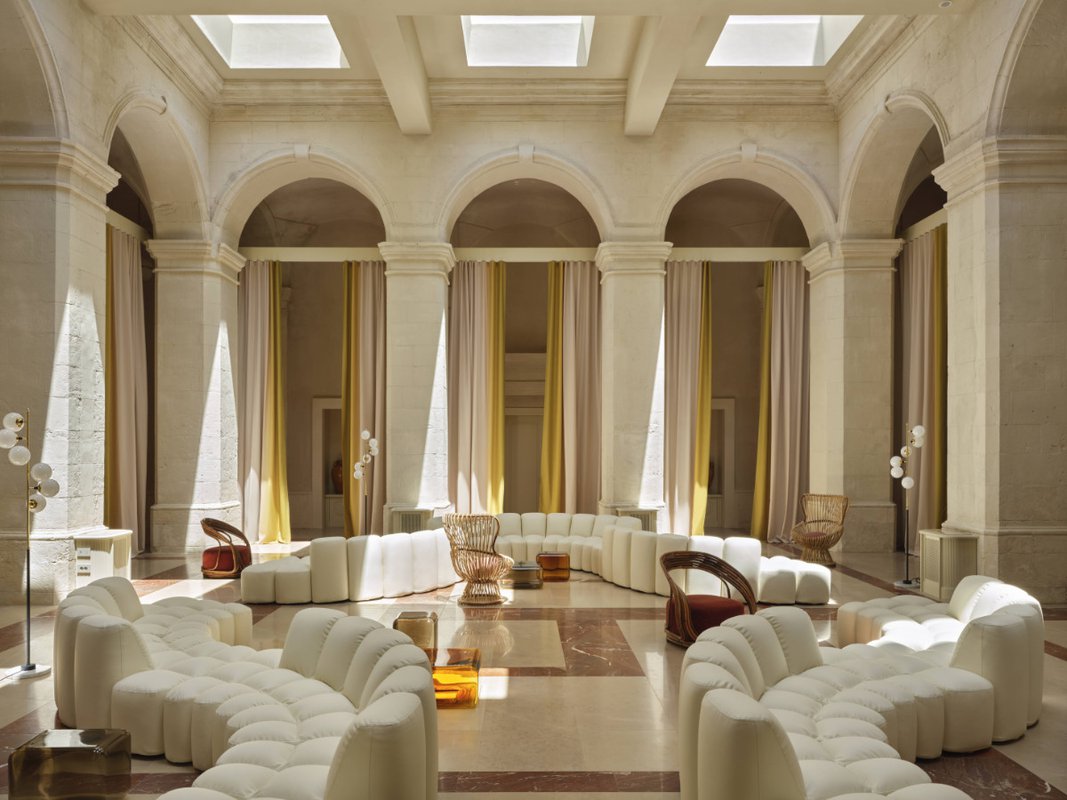
On the second floor, the lobby (really, a lounge) feels like an Ottoman men’s-only selamlık crossed with a classic Italian salone: an open, white-on-white cloister space with sculptural design pieces and a lofty ceiling. I visited during the soft launch, so there were a few kinks (most notably the not-yet-finished garden and the casual dining), but by spring 2026 the landscaping should be in full bloom, with vegetable plots, fruit trees, and new paths stitching the olive grove to the gardens and pools.
Fasano: Ancient Egnazia
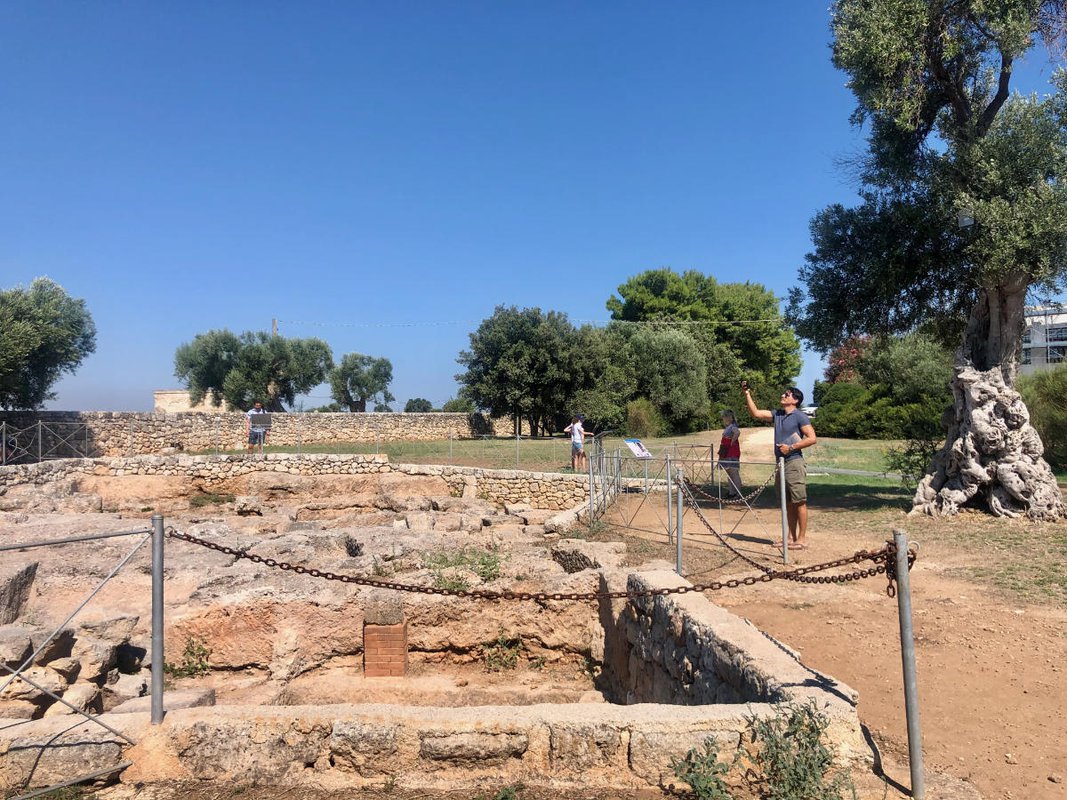
At the northern apex is Egnazia, a beachside hamlet layered with history. A massive 5th-century BCE wall sits on the sand delineating the Messapian town, later reinvented by Rome as Egnazia (Gnathia). You can see artefacts dating back to the Bronze Age inside at National Archaeological Museum of Egnazia, then explore the Egnazia Archaeological Park outside where streets, forum fragments, and necropoli run right to the shoreline and into it. You can wander ruins in the morning and swim at lunch.
Nearby is Savelletri, a one-road, picture perfect Italian beach town.
Taranto: Grit + Gold
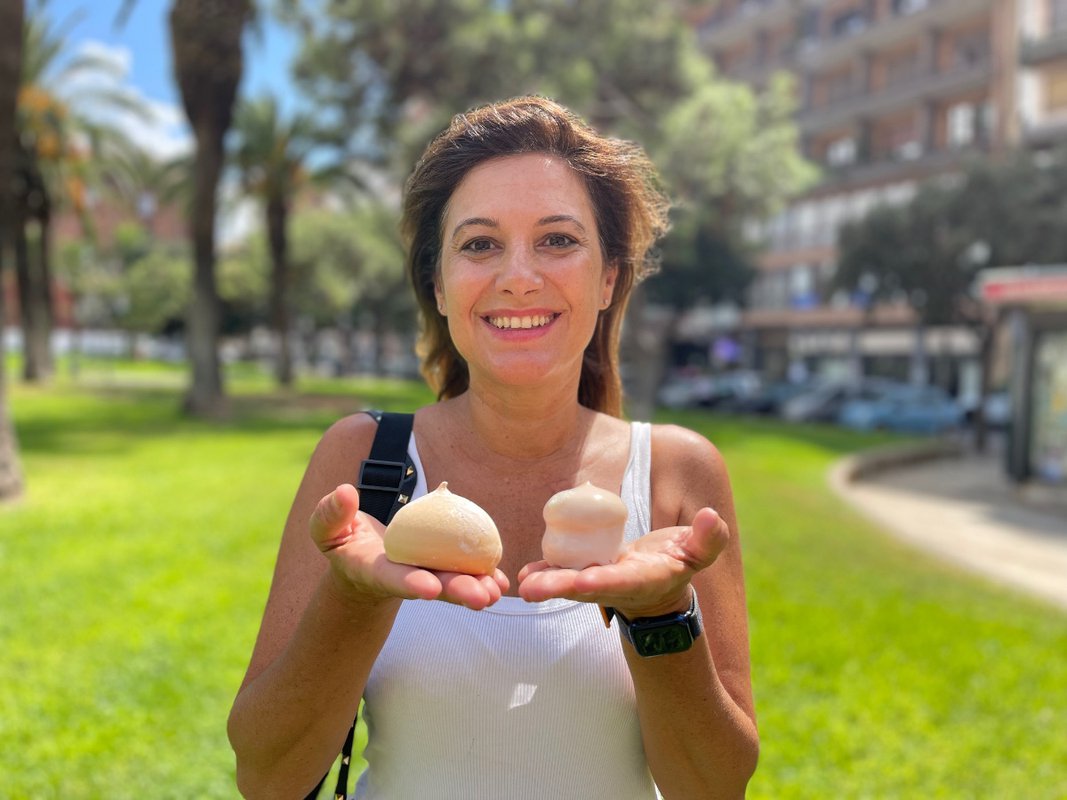
Swing west to Taranto, and you’ll find a gritty port with industrial scars and a lot of Magna Graecia. Walk through the old town and the Aragonese castle for an idea of what medieval Taranto was (and look for the ancient Doric columns), then cross the Ponte Girevole, the city’s famous swinging bridge, to the newer part of Taranto. MARTA museum is a knockout with Spartan and Greek treasures and Roman antiquities, and across Piazza Garibaldi is Argento, a bar pastry shop with the best sospiri (Pugliese sponge cake).
Brindisi: End of the Road
A 40-minute drive east, Brindisi might be my favorite city in Puglia. Less Baroque-pretty than Lecce and less medieval than Otranto, it’s more lived-in. Officially Roman by 266 BCE, it was literally the end of the line: the terminus of the ancient Via Appia, still marked by two marble columns, and the gateway to the eastern Mediterranean.
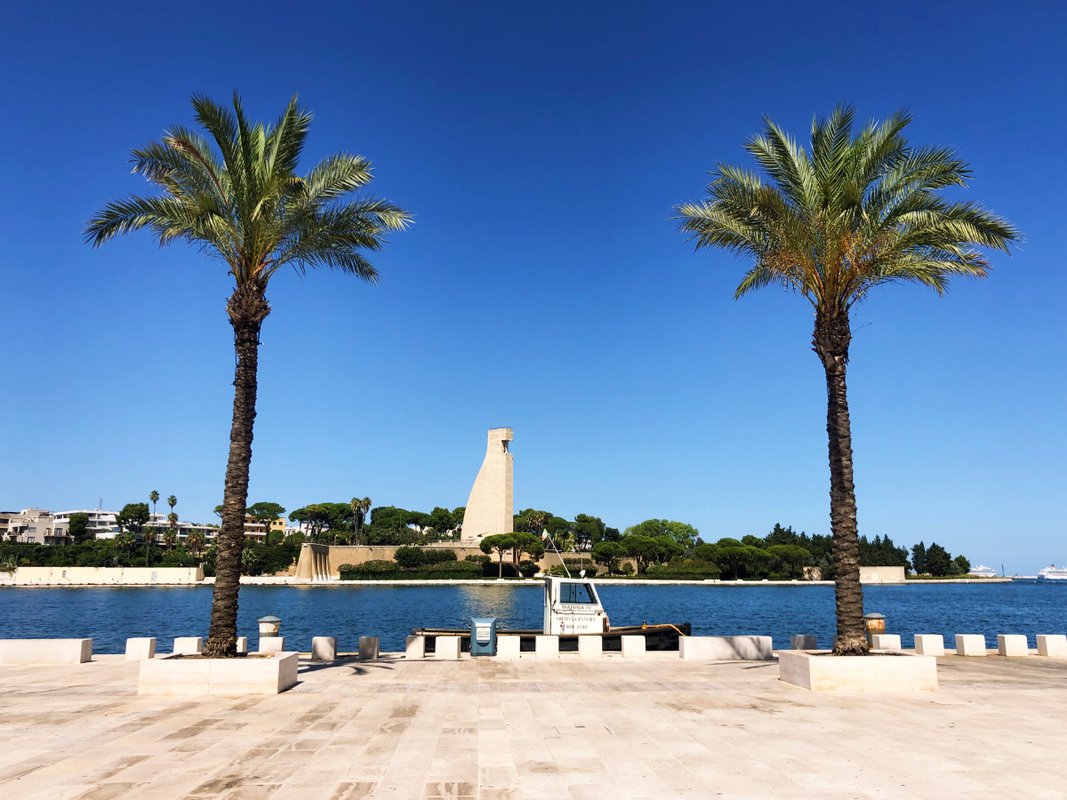
Most days, the port feels under the radar. Come warm-weather, ferry season, the action heats up as crowds shove off for Greece. The sites to see are Provincial Archaeological Museum Francesco Ribezzo for superb Roman marbles, remarkable Greek bronzes, and one of Italy’s best displays of underwater finds. Across the harbor rises the Monumento al Marinaio, an Art Deco stone “rudder” about 150 feet tall that honors sailors lost at sea.
In between: Ceglie Messapica, Grottaglie, and More
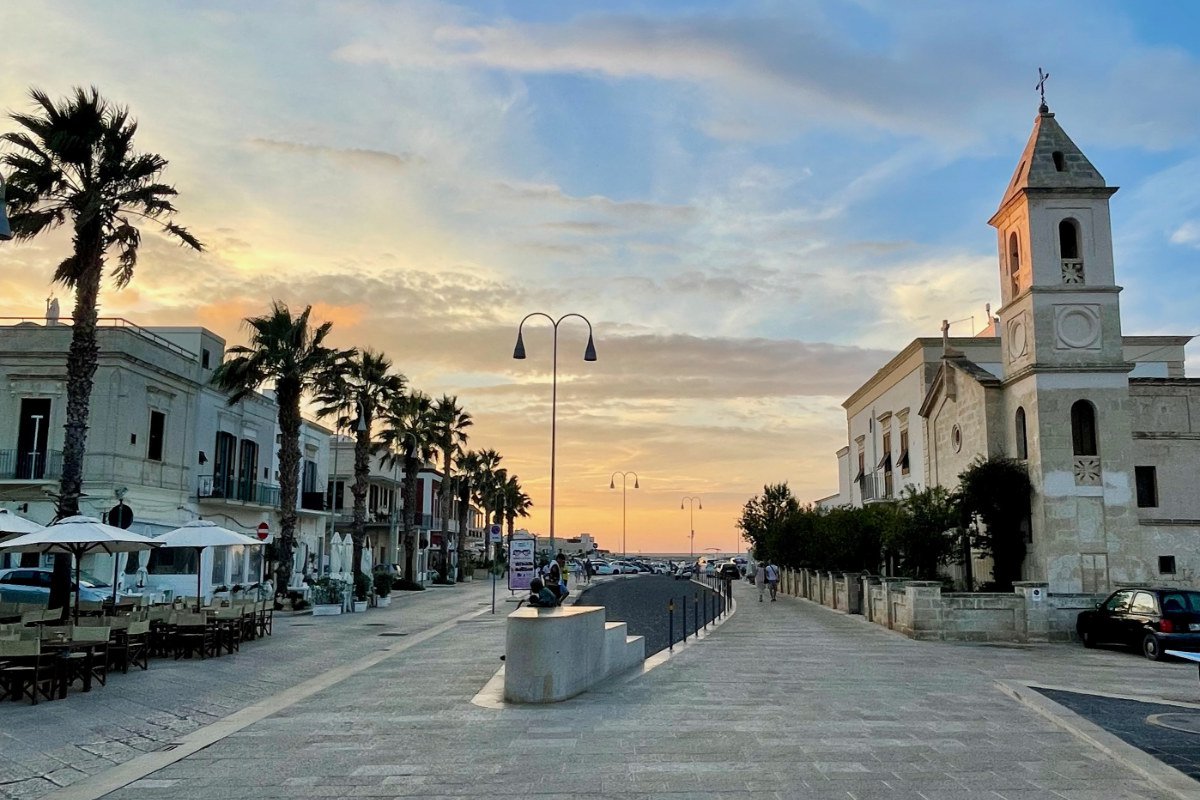
Criss-cross the triangle and you’ll find castles, small towns, and leftovers of the actual Appia Antica. But I’d be remiss if I didn’t pin two not-to-miss towns: Ceglie Messapica and Grottaglie.
Ceglie, a 15th-century jewel of crooked lanes and a castle, has bragging rights as Puglia’s gastronomic capital. Much less touristy than Ostuni and the cute towns of the Salento, Ceglie is all about the food — at family trattorie like L’Antico Arco, local favorites like La Taverna dei Domenicani, and Michelin-starred Cibus. Foodies, look out for the famous biscotti cegliesi (almond cookies at their best at the bakery Il Dolce della Tradizione), bombette (pork rolls), and the panino cegliese, a rosetta roll filled with spicy provolone, tuna, salty capers, and mortadella.
Nearby Grottaglie is Puglia’s ceramics capital. Since the Middle Ages, its potters have turned out earthy pieces in warm, subdued glazes — manganese brown, ochre, blue, yellow-green. Functional and collectible, you’ll find them everywhere, in shops and ateliers that are open for visits. Better yet, Museo di Ceramica tells the story.
Explore more of Puglia on CiaoBella.
This article first appeared on Fathom.